Buying Riverfront Property Around Lansing
April 23, 2026
April 23, 2026
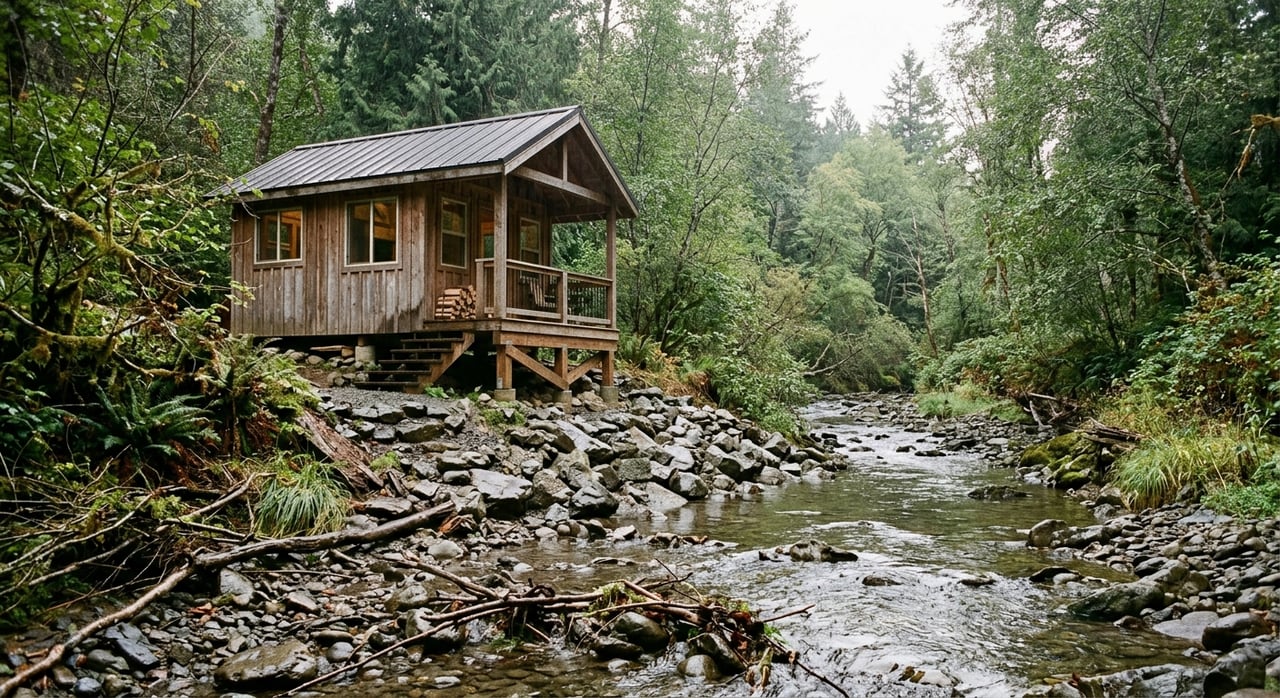
Dreaming about a home or getaway spot on the water near Lansing? Riverfront property can be a great fit for buyers who want fishing, paddling, scenery, or a peaceful second-home setting, but it also comes with extra layers of due diligence. If you are considering buying riverfront property around Lansing, it helps to understand how flood maps, stream classifications, access rights, and recorded restrictions can shape the true value of a parcel. Let’s dive in.
Lansing sits in Ashe County’s New River basin, where Big Horse Creek and Old Field Creek run through town and Big Horse Creek joins the North Fork New River southeast of Lansing, according to the Town of Lansing land-use plan. The broader New River system is a major part of the area’s appeal, and New River State Park adds public opportunities for paddling, fishing, and day use nearby.
That natural setting is a big reason buyers are drawn to the 28643 area. At the same time, riverfront land here is part of a water-management corridor, not just a scenic backdrop. If you are shopping for creekside or riverfront property, you need to look beyond shoreline footage and ask how the water affects what you can actually do with the land.
One of the first steps is to confirm the exact stream segment on or near the property. The North Carolina Department of Environmental Quality says surface-water classifications help define the uses that must be protected and that buyers should check a waterbody’s classification before purchasing or developing.
This is especially important around Lansing because classifications can overlap and vary by location. The Town of Lansing plan identifies Big Horse Creek as HQW and Old Field Creek as HQW plus Trout Waters, but that does not mean every parcel on a named creek has identical rules. In practical terms, you should verify the specific reach tied to the property instead of relying on the creek name alone.
Waterfront buyers often focus on the benefits first, like views, fishing, and direct access. Around Lansing, flood history should be part of the same conversation. Ashe County’s hazard mitigation plan documents flash flooding in Lansing, including overflow from Big Horse Creek in 2007 and 2009.
That does not mean every riverfront property is a poor choice. It does mean that water access and water risk are connected features. A lot that looks ideal in dry weather may have limits that affect insurance, placement of improvements, or long-term maintenance.
Before making an offer, check whether the parcel falls within a mapped flood hazard area. North Carolina’s Flood Information Center explains that Flood Insurance Rate Maps are the main tool used by state and local governments to identify and manage flood risk, and that Letters of Map Change can revise or amend flood-hazard information.
Ashe County directs buyers to use the flood mapping tools to determine whether a property is in a Special Flood Hazard Area and whether added requirements apply. If a parcel is in one of those areas, it can affect where you build, how you build, and what approvals you may need.
Buildability is where many riverfront purchases become more complex. Ashe County’s flood ordinance requires that in mapped flood areas, new construction and substantial improvements be anchored, use flood-resistant methods, and place utilities at or above the regulatory flood protection elevation, based on the county code.
County guidance also notes that approvals from floodplain, zoning, and Environmental Health may be needed before a permit is issued, and that engineering, surveying, and elevation certificates may also be required through Ashe County Building Inspections. Just as important, no structures can go in the floodway.
Some creekside lots also face stream setback limits that reduce the usable area more than buyers expect. Under Ashe County regulations, where FEMA has not established a base flood elevation, encroachments are barred within 20 feet of each bank or five times the stream width, whichever is greater, unless an engineer certifies there will be no increase in flood levels. That means a parcel that appears roomy on paper may have a much smaller practical building envelope.
A beautiful stretch of water does not always equal private recreational control. The North Carolina Attorney General has said that people may navigate waters that are navigable in fact, including by canoe or kayak, without the riparian owner’s consent, but the banks remain private property and the public does not have the right to land on or pass over the shore without consent, according to the official opinion.
For buyers, that distinction matters. You should confirm whether the property includes deeded frontage, shared access, or only nearby public recreational opportunities. If your goal is easy fishing, launching a kayak, or simply enjoying the river, the details of ownership and access should be clear before closing.
Not every buyer needs a fully private shoreline to enjoy the river lifestyle. For some, nearby public access may be just as useful. New River State Park says all of its access points allow launching kayaks and inner tubes, day use is free, and visitors can enjoy fishing, paddling, and picnicking.
That can make a non-riverfront or limited-frontage property more appealing than you might expect. If your priority is time on the water rather than private-bank exclusivity, nearby public access points may play a meaningful role in a property’s overall value to you.
If fishing is one of your main reasons for buying, ask more detailed questions about the water itself. NC DEQ explains that Designated Public Mountain Trout Waters provide public fishing access on private and public lands, and that this is separate from the Trout Waters water-quality classification. NC Wildlife also notes that public mountain trout waters are marked by signs and maps.
The research for Ashe County also notes that the 2026 delayed-harvest schedule includes Helton Creek, Big Horse Creek, and the South Fork New River. For an angler, that is useful context because a scenic creek, a trout-classified stream, and a publicly accessible fishing reach are not always the same thing.
The condition of the streambank matters for both enjoyment and maintenance. NC State Extension says streambank erosion is natural but can be accelerated by vegetation removal and other land-use changes. It also notes that riparian buffers are a best management practice, with tree buffers helping support streambank integrity.
For you as a buyer, this means the banks and vegetation are not just cosmetic features. A lot with healthy buffer areas may offer more long-term stability, while a property with bare or actively eroding banks may require more care and closer evaluation.
Some river properties come with recorded conservation easements or conservation agreements. The North Carolina Land and Water Fund says these agreements can restrict certain land uses in perpetuity, even though the owner still holds title and may retain specific reserved rights.
That can affect future plans in ways that matter. Trails, improvements, and stream or wetland restoration work may require prior written approval in some cases, so it is wise to review the recorded documents carefully and confirm whether your intended use is allowed before you move forward.
Before you make an offer on riverfront property near Lansing, keep this checklist handy:
Around Lansing, a riverfront property can be a wonderful fit for a primary home, weekend retreat, or recreational escape. But the best purchase is rarely the one with the most shoreline alone. In this part of Ashe County, the real value often comes down to floodplain status, buildability, access rights, bank condition, and any recorded easements.
If you want help sorting through those details before you buy, connect with A-1 Mountain Realty. Their local, hands-on approach can help you compare properties with your goals in mind and move forward with more clarity.
Stay up to date on the latest real estate trends.

We pride ourselves in providing personalized solutions that bring our clients closer to their dream properties and enhance their long-term wealth. Contact us today to discuss all your real estate needs!

PHYSICAL ADDRESS: 1 N Jefferson Ave West Jefferson NC 28694 MAILING ADDRESS: PO Box 828 West Jefferson NC 28694