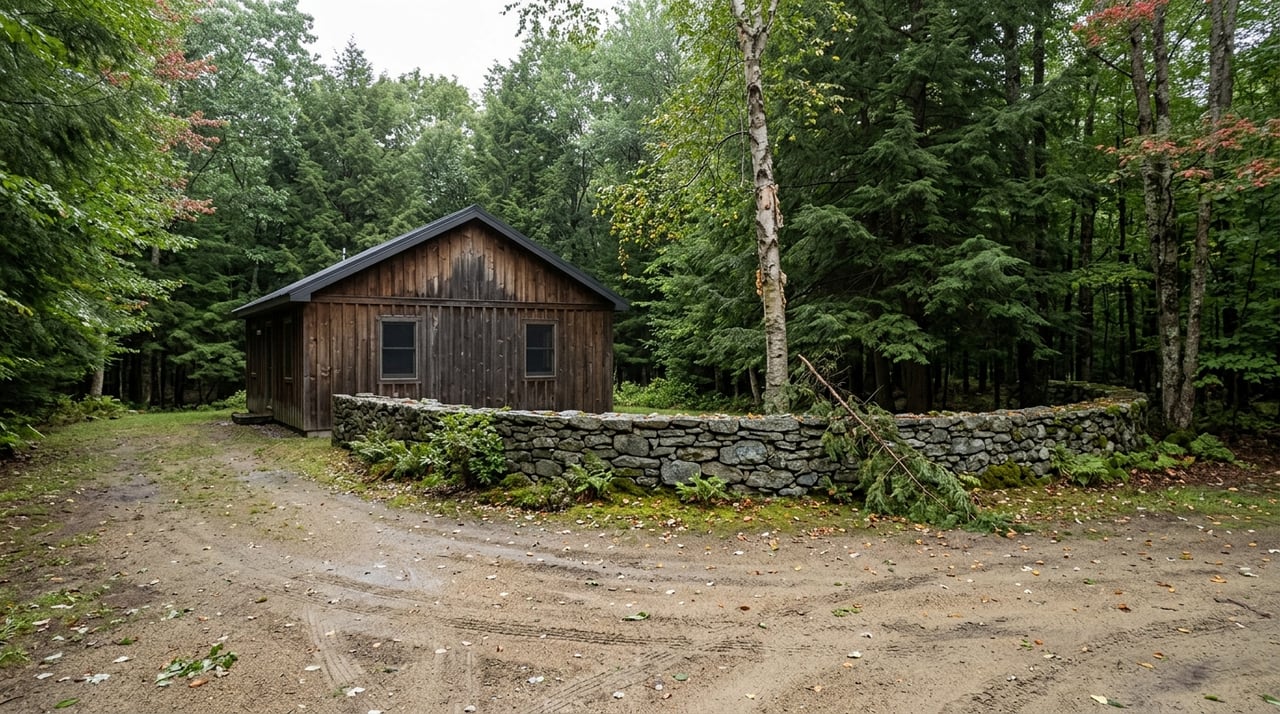
The Boone Airbnb Listing Might Not Come With Its Airbnb Permit
August 27, 2026
August 27, 2026
A house near King Street goes on the market this month with a spreadsheet-ready pitch: nightly rental income for three straight years, a management history, glowing guest reviews. A buyer reads it as proof of what the house can do. What it actually proves is what the seller was legally allowed to do, and that is not the same thing.
Boone's short-term rental ordinance draws a hard line most buyers never think to ask about until it's too late to matter: the permit that makes a homestay or vacation rental legal does not transfer with the deed. Not automatically, not with a quick form, not at all. The Town of Boone says so in plain language on its own short-term rental page, and the annual permit application itself asks every applicant to confirm they understand "this short-term rental permit is not transferrable." A new owner starts from zero, on the town's timeline, under the town's current rules, regardless of what the seller was doing the week before closing.
That single fact changes how a buyer should read any Boone listing that leans on rental income as a selling point.
Boone splits short-term rentals into two categories, and the difference matters for what you can legally do with a house after you own it.
A homestay rental is capped at two bedrooms, requires the owner to live in the home full time, and limits overnight guests to four adults. The owner has to be present, not traveling, not away for the weekend, during the rental term itself. A vacation rental can cover up to six bedrooms and doesn't require owner occupancy, but it's restricted to specific zoning districts and comes with its own web of standards: parking minimums, occupancy caps, a local contact who can respond within two hours, and a permit number that has to be posted on the property and on every listing.
Both categories share three conditions that outlast any single owner:
| Homestay | Vacation Rental | |
|---|---|---|
| Bedroom cap | 2 | 6 |
| Owner must live on-site | Yes | No |
| Permit renewal | Annual | Annual |
| Transfers with sale | No | No |
Whole-house rentals outside these two categories are largely off the table inside Boone's corporate limits. The town's 2021 ordinance amendment closed that door except for a narrow carve-out: a full-time resident can still rent the entire house for up to two weeks a year, a provision that functions much like the federal tax rule people associate with Masters week rentals. It's a release valve, not a business model.
The ordinance history matters here because it created a moving target, not a static rule.
Boone's Town Council amended the Unified Development Ordinance on December 8, 2021. Existing homestay and vacation rental operators had until December 31, 2022 to apply for a permit, and until June 30, 2023 to come into full compliance. Anyone starting a new rental after June 30, 2022 had to secure a permit before taking a single booking.
Then the rules tightened again. Vacation rentals sitting in the town's RA or R3 zoning districts only get to keep operating if they were legally permitted as of May 8, 2024, and only for as long as that same permit gets renewed on schedule, without a lapse. Miss a renewal, or let the permit get revoked, and that legacy status doesn't come back. A brand-new applicant in that same district today, including a new owner of that exact house, may not have a legal path to the same use at all.
Layer on the transitional buffer standard: vacation rentals can't operate within 75 feet of protected residential zoning districts like R1, R1A, RR, R2, and RA. A house that looks identical to its neighbor on the outside can sit on opposite sides of that line depending on lot geometry and zoning boundaries that never show up in listing photos.
None of this is visible from a portal search. It shows up when someone actually pulls the parcel's zoning history, which is exactly the step too many offers skip.
Versions of the same story circulate through Boone's real estate community every season. A buyer falls for a house near campus, plans to run it as a nightly rental to cover the mortgage, and only discovers after closing that the parcel sits in an R1 zone. R1 doesn't permit vacation rentals at all. The best available option becomes a long-term lease to no more than two unrelated tenants, which is a very different cash flow than the one they underwrote.
The house didn't change. The buyer's assumption about what came with it did.
A comparable fight played out one town over. In Frazier v. Town of Blowing Rock, North Carolina's Court of Appeals let a property owner continue a pre-existing nightly rental as a grandfathered nonconforming use, but only because the prior ordinance language was ambiguous and the rental use had been continuous. That's a court ruling in the operator's favor after a dispute, not a guarantee. It's also a reminder that when permitted use and zoning history get contested, the resolution takes lawyers and time, not a closing-day handshake.
If a Boone listing's value story depends even partly on rental income, treat the permit question as due diligence, not a footnote.
If you're selling a Boone property that currently operates as a homestay or vacation rental, the smoothest path is getting ahead of the question rather than fielding it mid-contract.
Pull your permit renewal history and any correspondence with Planning and Inspections showing current compliance. If you've had zero verified violations, say so plainly in your disclosures. Be upfront with buyers and their agents that the permit itself does not convey, so nobody discovers it as a surprise during underwriting. And price the listing on the property's fundamentals rather than leaning entirely on trailing rental income, since a buyer's lender may discount that income if legal continuation isn't guaranteed.
This matters more in a market moving as fast as Boone's has this year. Homes here were selling at 99.1% of list price and spending a median of 42 days on market as of June 2026, according to regional MLS data. In a market with that little friction, the buyers who skip verification steps are the ones most likely to close first and find out second.
Does buying outside Boone's town limits avoid this problem? It trades one set of rules for another. Watauga County doesn't impose the same permit structure outside the corporate limits, but HOA covenants often fill that gap, and a homeowners association can restrict or ban short-term leasing if its recorded documents allow it. Check the CCRs with the same seriousness you'd check a zoning map.
Can I just keep operating the rental while my own permit application is pending? No. Boone enforces this actively through a 24/7 reporting system, and neighbors can submit complaints with photo or video evidence. Operating without a permit exposes you to civil penalties that run $100 to $200 per day per violation, and it can jeopardize your ability to get a permit approved at all.
If a listing shows strong rental income, doesn't that prove the use is legal? It proves the seller was operating, not that the use is guaranteed to continue under different ownership or under today's rules. Income history and permit eligibility are two separate questions, and only one of them survives the closing table automatically.
If you're weighing a Boone property with rental potential in the mix, A-1 Mountain Realty can walk the parcel's zoning and permit history with you before you write an offer, not after. Schedule a free consultation and let's make sure the numbers you're underwriting are the numbers you'll actually be allowed to earn.
Stay up to date on the latest real estate trends.
We pride ourselves in providing personalized solutions that bring our clients closer to their dream properties and enhance their long-term wealth. Contact us today to discuss all your real estate needs!

PHYSICAL ADDRESS: 1 N Jefferson Ave West Jefferson NC 28694 MAILING ADDRESS: PO Box 828 West Jefferson NC 28694