Lansing's New River Access Point Just Made One Kind of Land Harder to Verify
August 13, 2026
August 13, 2026
For as long as most people can remember, if you wanted a proper put-in or take-out on the New River near Lansing, you drove south to New River State Park, where seven established accesses along the South Fork have handled paddlers for decades. The North Fork, the stretch that actually runs closest to downtown Lansing, had no formal public launch at all. Locals used farm pull-offs. Renters guessed at unmarked banks.
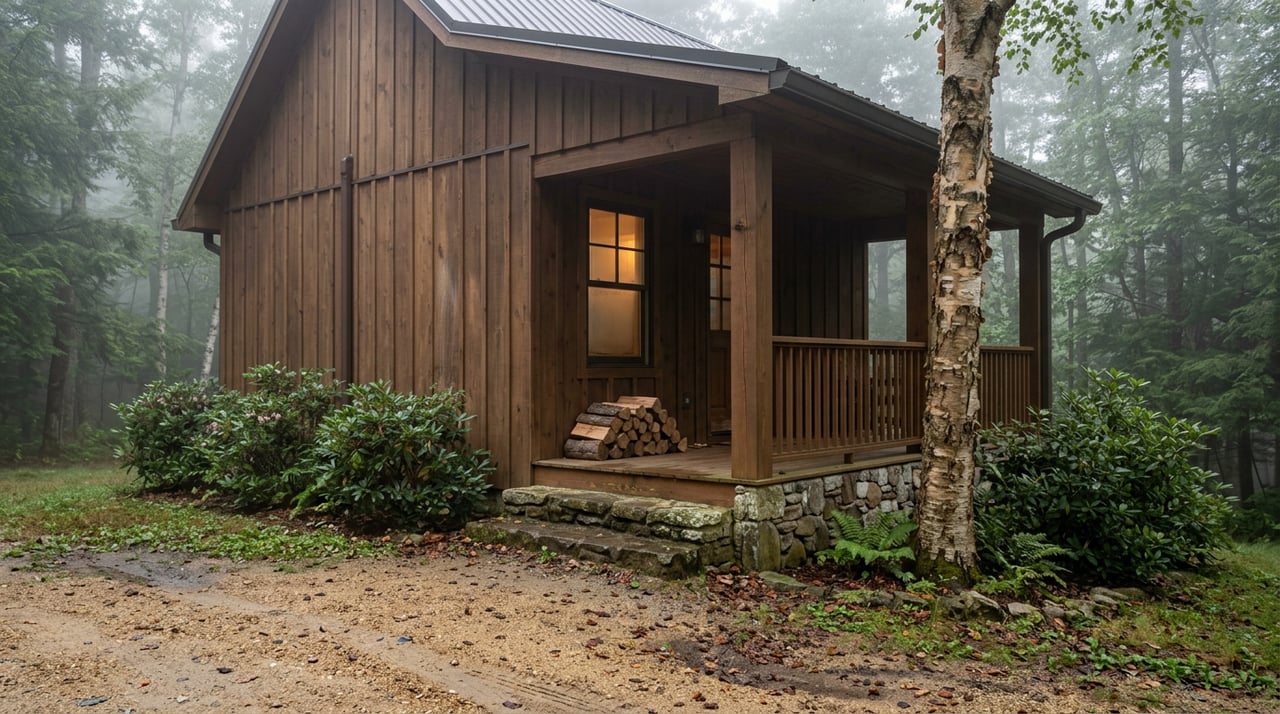
That is changing. Last fall, the New River Conservancy announced it had purchased a three acre undeveloped parcel at Deep Ford Bridge, at 1430 West Deep Ford Road, with plans to transfer ownership to Ashe County government and open the first formal public access point on the North Fork. The design works both directions: a take-out for floats coming down Big Horse Creek and the North Fork, and a put-in for trips heading downstream, built around an existing farm road pull-off rather than new construction.
If you buy or sell land along that stretch, this is the kind of development that reshapes buyer attention once it is fully in place. River frontage that was previously accessible only by knowing someone, or trespassing politely, is set to get a public entry point a short drive from town for the first time. That is genuinely good news for anyone who owns or is considering North Fork acreage.
Here is the part that does not show up in the celebratory version of this story: the same stretch of months that gave North Fork land a new reason to be desirable also made it harder to prove, on paper, that a given parcel can legally support a home.
Every Ashe County tax pin and parcel ID changed in October 2025. AppHealthCare, the district health department that issues septic and well permits for Ashe, Alleghany, and Watauga counties, still has not finished updating its own records to match. Its current guidance for anyone trying to locate septic or well permit history is to use the old parcel ID, pulled from the Ashe County GIS website, because the software vendor has not caught up yet.
That sounds like a minor administrative footnote until you are the one trying to answer a simple question before writing an offer: does this land already have a permitted, working septic system, or has it never been approved for one at all? The permit search tool AppHealthCare offers matches applicant name, subdivision, tax ID, and the year a system was installed. If the tax ID on your title work is the new number and the permit was filed under the old one, the search comes up empty even when a valid permit exists.
There is a second wrinkle that surprises more buyers than the renumbering does. AppHealthCare's own septic and well application materials state plainly that compliance inspections and existing system inspections cannot be performed for real estate transactions or for a septic system locate alone. In many parts of the country, a buyer simply orders a septic inspection as part of due diligence, the way they would a home inspection. In Ashe County, that specific service is not something the county will do on your behalf as part of a closing. You are left with permit records, a deed search through the Register of Deeds if the file is thin, and whatever the seller can produce.
Neither of these is a crisis. Both are exactly the kind of friction that a buyer moving from a market with municipal sewer never sees coming, and exactly the kind of friction that matters more, not less, on a piece of raw or lightly improved acreage near a river that just got easier to reach.
Land aggregators covering Ashe County do not agree with each other, and the disagreement is instructive. One market report, updated as of March 2026, put the median sale price for rural land at $17,500 per acre, on properties averaging just over 11 acres. Two other current listing aggregators, pulling from overlapping but not identical inventory, list average asking prices of $19,039 and $30,442 per acre. A fourth lists an average asking price for farms and rural real estate of $715,981, on parcels averaging 43 acres, a figure pulled upward by large historic farms and gated-community homesites that have little in common with a two-acre riverfront lot.
| What was measured | Figure |
|---|---|
| Median sold price per acre, rural transactions as of March 2026 | $17,500 |
| Average asking price per acre, one current listing aggregator | $19,039 |
| Average asking price per acre, a second current listing aggregator | $30,442 |
| Average asking price, all farms and rural real estate currently listed | $715,981 on parcels averaging 43 acres |
None of these numbers is wrong. They are measuring different products under the same label. A 143 acre unrestricted tract with road frontage on a state-maintained road is not competing for the same buyer as a 2.5 acre lot with river frontage and a builder ready to break ground next spring. In a county this rural, "land" is not a commodity with one price. It is a bet on what that specific parcel is legally allowed to become, and that legal status runs straight back to a septic permit file that may or may not be findable under the parcel number currently on your tax bill.
The honest answer to "what does land cost near Lansing" is not a number. It is a question: has this parcel already cleared the permitting step that determines whether it can be a home site at all?
If you are looking seriously at acreage near Lansing, particularly anything within reach of the new Deep Ford Bridge access, a few practical steps protect you before you are locked into a contract.
None of this is new to buyers who have done a rural land deal in the North Carolina mountains before. It is exactly the kind of detail that catches first-time land buyers, second-home buyers coming from a city with municipal utilities, and even experienced buyers who assume one county's process mirrors another's.
Does the October 2025 parcel ID change affect land I already own? It affects how easily anyone, including you, can locate permit history tied to your property. The permit itself did not change. Finding it in AppHealthCare's system may require the old parcel ID until the department finishes updating its records.
Can I hire a private inspector instead of going through the county? AppHealthCare's stated policy is that it will not perform compliance or existing-system inspections for real estate transactions. Buyers typically rely on permit records, seller disclosure, and independent professionals such as licensed soil scientists for new evaluations, rather than a county-ordered pre-sale inspection.
What happens if a parcel has never had a septic permit at all? It goes through the same application and site evaluation process as any new construction, including test holes, setback requirements, and the twelve-month permit validity window. Land with no permit history is not disqualified from building, but it does mean the timeline for closing on financing tied to construction should account for that process rather than assume it is already done.
Buying acreage near a river that is about to get a lot more accessible is a genuinely good position to be in. Getting the paperwork right before you close is what turns that position into a house you can actually build. If you are looking at land near Lansing, or anywhere else in the High Country, and want someone who already knows which questions to ask AppHealthCare before you write an offer, A-1 Mountain Realty is glad to walk through it with you. Schedule a free consultation and let's look at the specific parcel you have in mind.
Stay up to date on the latest real estate trends.
We pride ourselves in providing personalized solutions that bring our clients closer to their dream properties and enhance their long-term wealth. Contact us today to discuss all your real estate needs!

PHYSICAL ADDRESS: 1 N Jefferson Ave West Jefferson NC 28694 MAILING ADDRESS: PO Box 828 West Jefferson NC 28694